


If you are an Indian global investor and aware of the wealth erosion risks created by the US Estate Tax, you probably already know that UCITS ETFs are an effective way of maintaining access to the US market without exposing yourself to the Estate Tax risk.
This is our detailed guide on how you can find the right UCITS ETFs for global investment, including how you can find UCITS equivalents of US indices and ETFs.
Table of contents
- What are UCITS?
- Why are global investors choosing UCITS ETFs?
- How to find the right UCITS ETFs for global investment?
- How to check a UCITS ETF before you buy
- Invest in UCITS ETFs with Paasa
- More tools from Paasa
What are UCITS?
UCITS (Undertakings for Collective Investment in Transferable Securities) are investment funds that comply with EU (European Union) regulations and therefore can be marketed and distributed across the EU.
What are UCITS ETFs?
A UCITS ETF is an Exchange Traded Fund (ETF) that is domiciled in an EU or EEA member state and strictly adheres to these UCITS regulations.
While these funds are legally based in Europe (typically Ireland or Luxembourg), they are often used to invest in global assets, including US indices like the S&P 500 or Nasdaq 100.
Are UCITS ETFs as liquid as US ETFs?
Yes. For the large index trackers most global investors hold, you can enter and exit positions just as easily as you would with a US-listed ETF.
Here is what sits behind that:
- Liquidity comes from the holdings, not the ticker: Daily trading volume is the wrong measure for an ETF. Authorised participants can create and redeem units on demand against the underlying basket, so a UCITS ETF tracking the S&P 500 draws on the liquidity of those 500 stocks. The fund is as tradeable as what it holds, regardless of how many units changed hands yesterday. Spreads are usually tightest when both the European and US markets are open, from about 2:30 pm to 4:30 pm UK time.
- Continuous two-way pricing: Professional market makers quote bids and offers throughout market hours on funds from managers like BlackRock (iShares) and Vanguard, so there is a price on screen whenever you want to trade.
- Multiple listings and currencies: Major UCITS ETFs are listed on the London Stock Exchange, Xetra, Euronext, and Borsa Italiana, often in USD, EUR, and GBP. You can trade the same fund on the venue and in the currency that suits your account.
- Open-ended by law: EU rules require every UCITS to be open-ended, and practically all ETFs deal every trading day. Your right to redeem is built into the structure.
Why are global investors choosing UCITS ETFs?
Global investors are choosing UCITS ETFs primarily to protect themselves from the US Estate Tax while maintaining their exposure to the US market.
The US Estate Tax is a federal tax levied on the transfer of a deceased person's assets to their heirs. This tax is progressive and the rates range from 18% to 40%.
For non-residents, the rate schedule is applied to the full value of your US-situs assets (before any deductions), and a flat unified credit of $13,000 is then subtracted from that figure. This is why $60,000 is the threshold that matters: at that estate size the credit exactly cancels out the tax, so nothing is payable. Above it, the credit stays fixed while the tax keeps climbing.
Example
Suppose you are a software professional based in India and working at a US tech company like Microsoft. A part of your compensation package is in the form of RSUs, and you currently hold $200,000 worth of Microsoft stocks.
Assuming this is the only US-situs asset you hold right now, your total Estate Tax liability on your stocks (since they are US-situs assets) worth $200,000 will be $41,800 (20.9%).
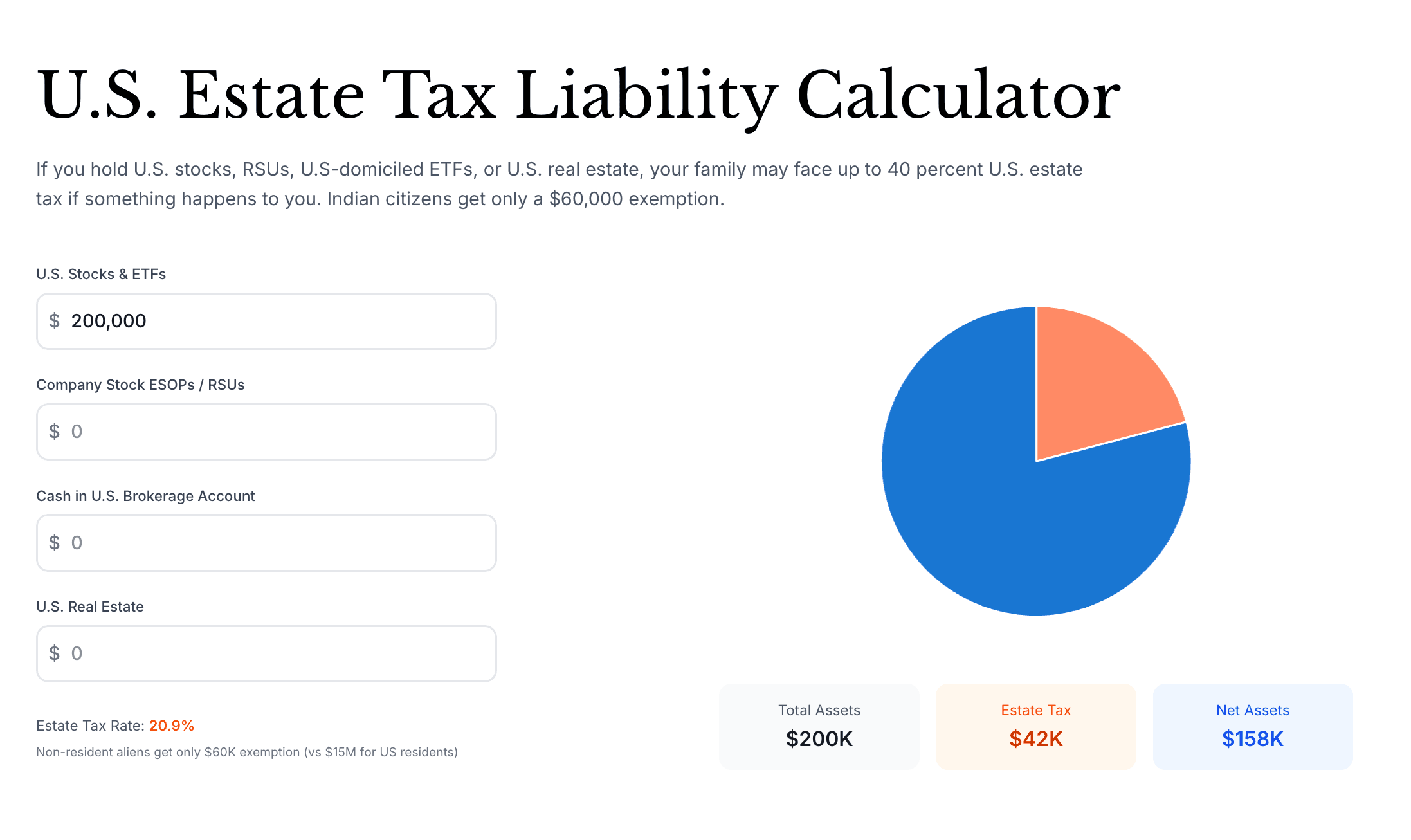
In the event of your death, your family will have to pay this amount upfront before they can access your assets.
As UCITS ETFs are legally situated in the European Union, they are not subject to the US Estate Tax even when they hold US stocks such as Apple, Microsoft, or Alphabet.
Use our Estate Tax Calculator to find your exact liability.
Note: If you are a US tax resident (for example, a US citizen, a green card holder, or someone who meets the substantial presence test), UCITS ETFs are usually not right for you. The IRS treats most of them as Passive Foreign Investment Companies (PFICs), which leads to higher tax and complex yearly reporting. US citizens are also subject to US Estate Tax on their worldwide assets, so UCITS ETFs do not protect them from it. Read our guide on UCITS ETFs for NRIs: PFIC Rules and US Estate Tax.
How to find the right UCITS ETFs for global investment?
You can use our UCITS Screener to discover and compare UCITS ETFs and other UCITS-compliant funds.
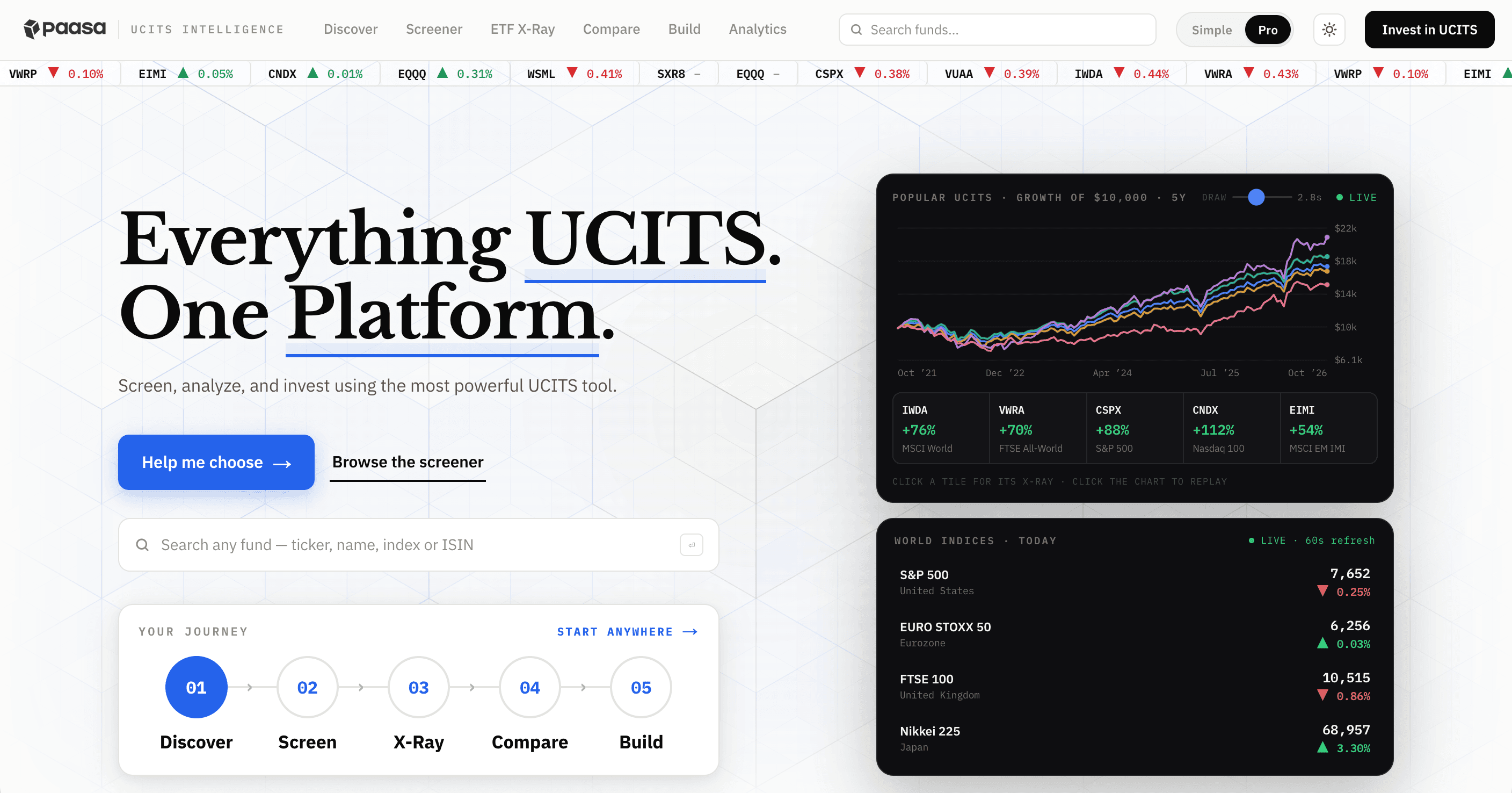
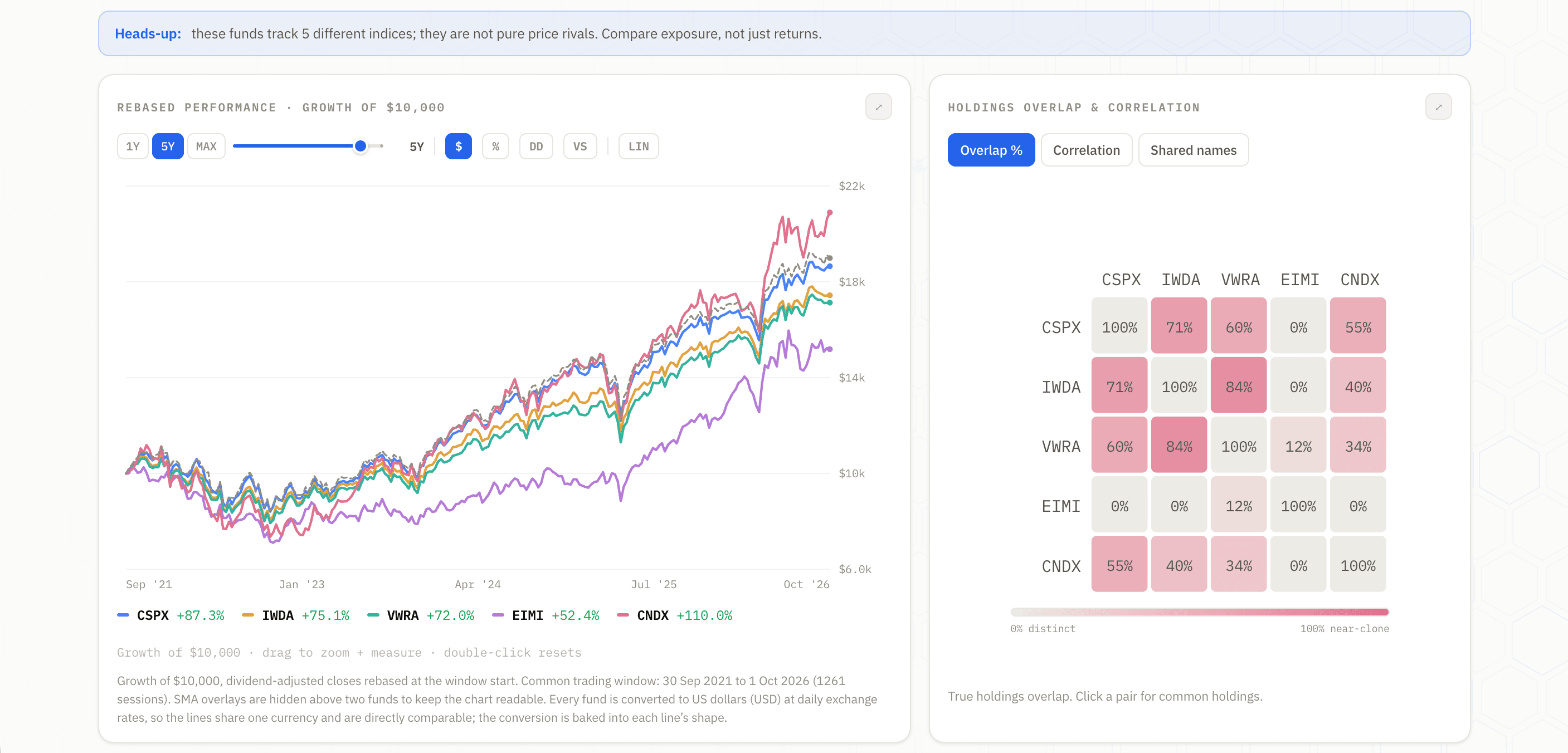
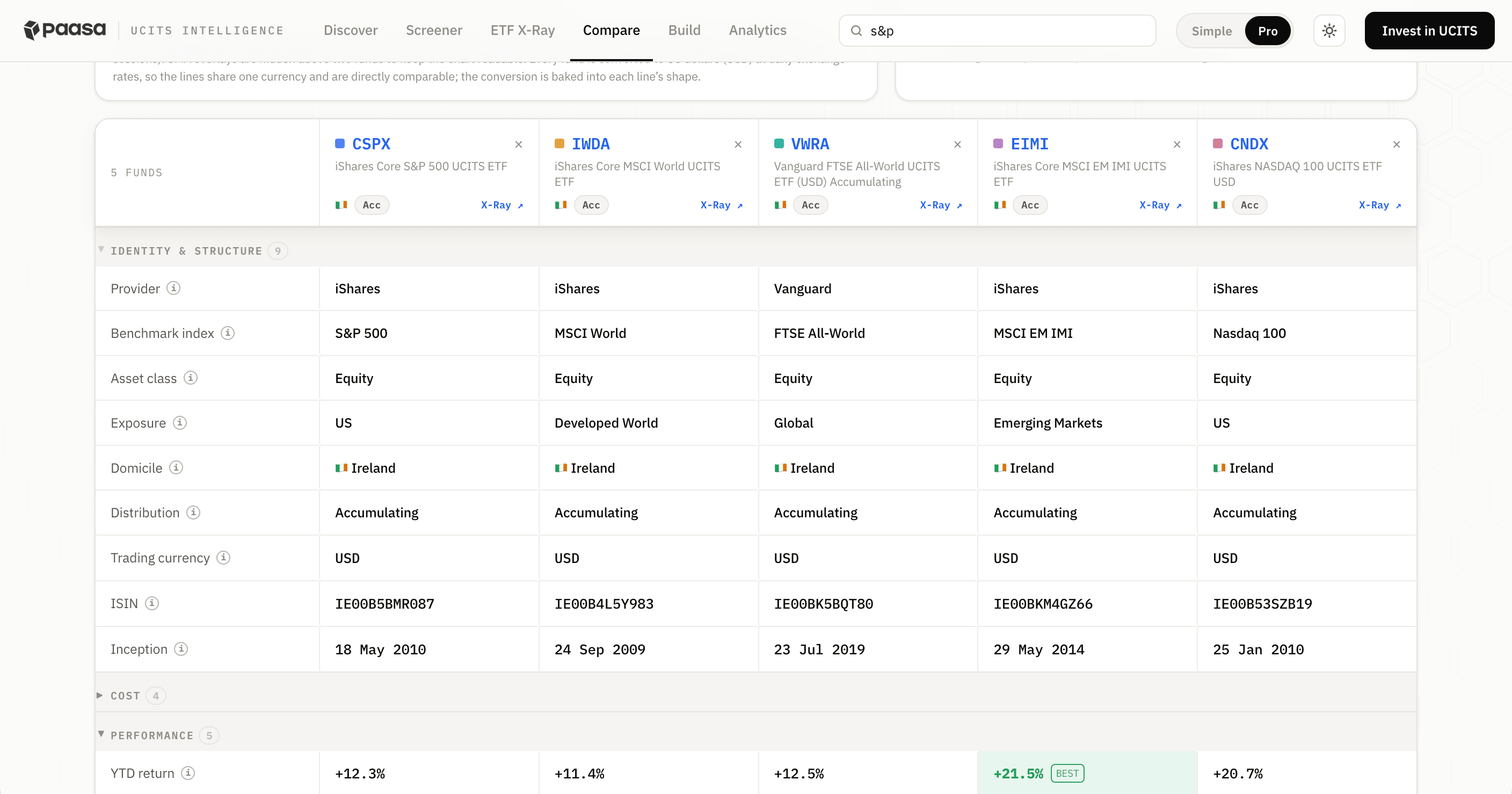
You can search, filter, and compare UCITS by the Asset Class, Dividend Type, Domicile, Asset Management Company (AMC), the Exchange they are listed on, and the Currency they are denominated in.
How to check a UCITS ETF before you buy
The screener helps you shortlist funds. Before you buy one, check it in this order:
- ISIN: The first two letters show where the fund is domiciled (IE for Ireland, LU for Luxembourg). Also check that the ISIN matches the share class you want, accumulating or distributing, since each has its own ISIN.
- Factsheet: Check the expense ratio (TER), fund size, replication method (physical or synthetic), dividend policy, and tracking difference.
- Key Information Document (KID): A short summary of the fund's risk level, costs, and regulator.
- Prospectus: The full rulebook for the fund. You only need it if something in the factsheet or KID is unclear, such as how the fund uses swaps or lends its securities.
- Annual report: Shows what the fund actually held and what it actually cost over the year.
- Exchange listing: Check the ticker, trading currency, and bid-ask spread on the exchange you will buy on. The spread is the gap between the buying and selling price, as a share of the price: (ask price minus bid price) divided by the midpoint price.
Tracking difference vs tracking error
Factsheets show two numbers that sound alike but measure different things:
- Tracking difference: How much the fund's return differs from its index over a period. If the index returns 10% and the fund returns 9.9%, the tracking difference is minus 0.1%. This is what holding the fund actually costs you.
- Tracking error: How much that difference moves around over time. A low tracking error means the fund follows its index consistently.
When comparing two funds on the same index, tracking difference matters more.
Fund size and closure risk
Fund providers can close or merge funds that do not attract enough money. If your fund closes, you receive its value in cash. In India, that counts as a sale, so you may owe capital gains tax and will need to reinvest.
Larger, older funds are less likely to close. Many investors prefer funds with at least €100 million in assets and a few years of history.
Red flags to watch for
- Luxembourg domicile for a fund that holds US stocks directly: It usually pays 30% US tax on dividends, compared with 15% for an Irish fund (see Ireland vs Luxembourg UCITS). Synthetic funds that track US indices through swaps are an exception, since they generally do not pay this tax.
- Distributing share class for long-term growth: For Indian residents, dividends paid out are taxed every year. Read more on accumulating vs distributing UCITS ETFs.
- Small or new fund: Less than about €100 million in assets, or less than a few years of history.
- Poor tracking difference: The fund trails its index by much more than its TER, or by more than similar funds.
- Wide bid-ask spread: You lose more each time you buy or sell.
- Higher TER than similar funds: Another fund may track the same index for less.
Invest in UCITS ETFs with Paasa
Paasa is an India-facing platform built for UCITS investing, with end-to-end handling of FEMA compliance, INR remittance tracking, and tax-ready reporting; removing the operational burden from the investor.
Paasa also offers competitive FX rates on your remittances, so less of your capital is lost on the way into the market.
Use our UCITS Screener to discover and compare UCITS-compliant investment instruments.
More tools from Paasa
- Estate Tax Calculator: You can use Paasa’s Estate Tax calculator to instantly find out your total estate tax liability based on the value of your US assets.
- Brokerage Calculator: You can calculate your brokerage costs by Paasa’s Global Brokerage Calculator.

